
Canadian organic search has changed more in the past eighteen months than in the previous five years combined. AI Overviews now answer directly inside the SERP for a significant share of informational queries, click-through rates on those queries have collapsed, and the discovery patterns that built the last decade of Canadian search marketing don't apply the same way anymore.
What actually happened
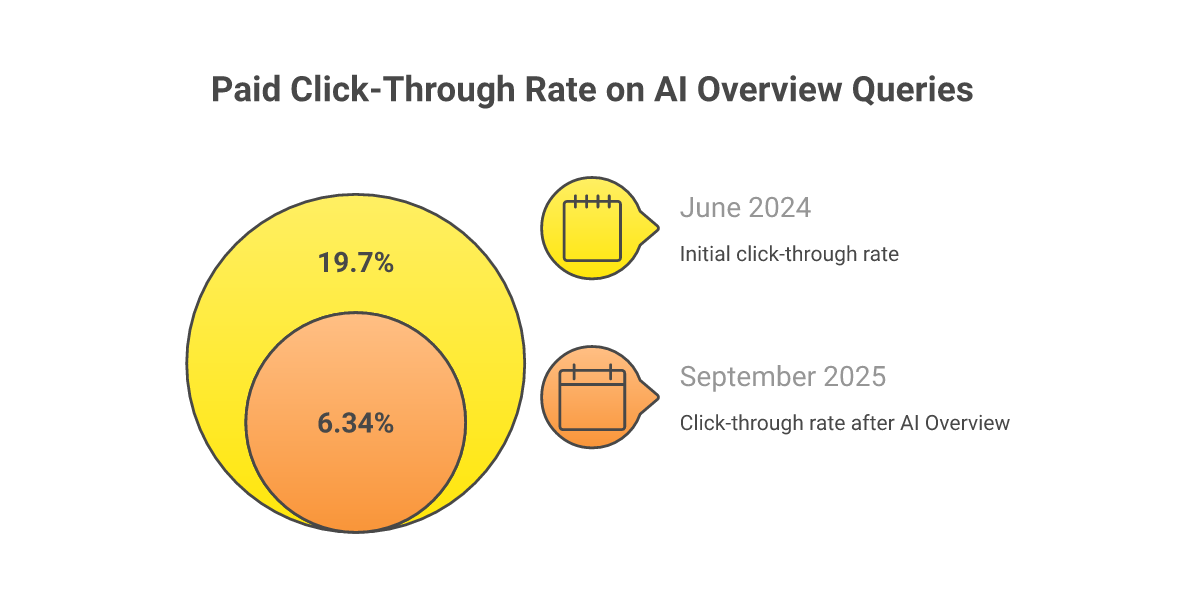
Search Engine Land's tracking data shows paid CTR on AI Overview queries dropped from 19.7 percent in mid-2024 to 6.34 percent by late 2025 — a 68 percent collapse. Organic clicks on the same queries fell similarly. This is not a small adjustment. For Canadian businesses that built their funnel on top-of-funnel informational content, the math no longer works the same way.
What still earns clicks
Content backed by first-hand Canadian experience continues to perform. Original case studies, primary research, opinionated commentary, and data that AI engines can't pattern-match against generic training material still earn clicks. The brands that ranked on commodity content are taking the biggest hit; brands that built genuine authority are largely intact.
Localness now matters more, not less
One unexpected consequence of the AI Overview rollout: Canadian-context queries route to Canadian sources at a higher rate than they used to. AI Overviews try to surface relevant local information, and Canadian businesses with clear geographic signals — addresses, regulatory references, currency, provincial context — are surfacing in places where they previously fought share against larger US-domiciled sites.
This won't last forever. But for now, "Canadian-ness" is a tailwind, not a footnote.

What to measure now
Rank tracking on its own is no longer the right metric. We recommend members measure three things in addition to (not instead of) rank:
- Share of answer — how often your brand appears in AI Overview citations for your priority queries.
- Branded search volume — still highly correlated with downstream conversion, even when traffic falls.
- Direct traffic from new sources — a rough proxy for assistant-driven referrals where attribution breaks down.
Most legacy SEO dashboards don't track any of these well yet.
Where this leaves Canadian agencies
The discipline isn't dead — it's narrower. Generic SEO advice (write more content, get more backlinks) increasingly produces diminishing returns. Specific advice rooted in Canadian context, original data, and emerging GEO practice continues to differentiate. Members navigating this should ground client work in our Standards, especially honest representation of expected outcomes — promising 2024-style organic traffic gains in a 2026 environment is a fast way to lose accounts and reputation.
Keep reading
Browse the full blog index, jump to our resources, or look up terms in the glossary.